How Private Crypto Swaps Work: Multi-Stage Exchange Explained
A private crypto swap converts one asset into another through a route designed to reduce the direct on-chain relationship between the wallet that sends the source asset and the wallet that receives the destination asset. Instead of treating the order as one simple conversion, the route is separated into multiple exchange stages.
The important idea is route separation. Source and destination blockchains still record their own transactions, but the exchange architecture avoids representing the two user wallets as endpoints of one direct transfer.
From a Direct Swap to a Private Swap
A regular crypto swap and a private swap can produce the same destination asset while using different internal routing. The difference is in how the conversion connects the source side with the payout side.
Standard Single-Route Exchange
A conventional instant swap receives the source asset, performs the conversion and sends the destination asset to the receiving wallet.
The source-chain deposit and destination-chain payout are separate blockchain transactions, but the service can map them internally to one order and the route may be relatively simple.
Multi-Stage Private Exchange Route
A private swap separates the process into at least two exchange stages. The first stage converts the source asset into a liquid intermediate routing asset; a second stage uses that routing asset to acquire the final cryptocurrency and make the payout.
This architecture reduces the direct sender-to-recipient relationship visible from a simple one-stage route.
Multi-Stage Routing Step by Step
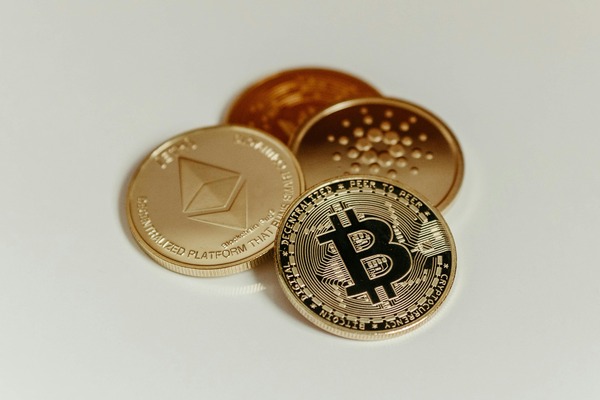
The route is automated by the service. The user chooses the asset to send, the asset to receive, the amount and the destination wallet; the exchange engine handles the internal routing.
Exchange Stage 1 and the Intermediate Asset
The source cryptocurrency is sent to the unique deposit address for the order. After the required network confirmation, the first exchange stage converts it into an intermediate asset selected for liquidity and route compatibility.
The routing asset is not the user's final destination. It is a bridge between two independent conversion stages.
Exchange Stage 2 and the Receiving Wallet
The second exchange stage converts the intermediate value into the requested destination cryptocurrency. The final asset is then paid to the wallet address supplied when the order was created.
The route can be summarized as:
- choose source asset, destination asset and amount;
- enter the receiving wallet address;
- receive a unique deposit address;
- send the source asset on the specified network;
- complete exchange stage 1;
- route through the intermediate asset;
- complete exchange stage 2;
- send the final asset to the destination wallet.
Why Private Swaps Use Intermediate Assets
An intermediate routing asset allows the service to separate exchange stages while preserving liquidity across many source and destination combinations. It is a routing mechanism, not a privacy coin requirement.
Separating Source and Destination Activity
The source blockchain records the user's deposit. The destination blockchain records the final payout. Internal conversion stages do not have to appear as one direct public transfer between those two user wallets.
This is the central privacy property of the route: it reduces direct endpoint linkage rather than claiming that the public blockchains themselves become private.
Liquidity and Cross-Chain Compatibility
A liquid routing asset can connect exchange venues and blockchain networks that do not have a practical direct market between every possible pair.
This allows one route engine to support many combinations without requiring a separate direct liquidity pool for every source-to-destination pair.
| Characteristic | Regular swap | Multi-stage private swap |
|---|---|---|
| User action | Send one asset, receive another | Same basic user flow |
| Internal exchange stages | Usually one primary conversion | Multiple separated stages |
| Intermediate routing asset | Not always required | Core part of the route |
| Source-chain transaction | Public if source chain is public | Public if source chain is public |
| Destination-chain transaction | Public if destination chain is public | Public if destination chain is public |
| Direct endpoint relationship | Simpler route | Reduced through stage separation |
What Remains Visible On-Chain

Private routing changes the relationship between exchange stages; it does not change the consensus rules of Bitcoin, Ethereum, TRON or another public blockchain. This distinction is essential for describing private swaps accurately.
Source-Blockchain Activity
If the source asset uses a transparent blockchain, the deposit transaction can be viewed on that chain. Its address, amount and timing remain subject to the normal visibility rules of that network.
The broader mechanics of crypto transaction tracing explain how public-ledger data is analyzed.
Destination-Blockchain Activity
The payout can also be visible when the destination blockchain is transparent. What the private route changes is the direct transaction relationship between source and destination endpoints.
Different methods solve different privacy problems. Our private swap vs mixer comparison separates route-level exchange privacy from mixing and account-level no-KYC flows, while privacy coin technology covers protocol-level transaction privacy.
To use the commercial implementation of this routing model, start a private crypto swap from the exchange form.
Private Crypto Swap Technology FAQ
These questions summarize the main mechanics of a multi-stage private exchange route.
What is a private crypto swap?
It is a crypto-to-crypto conversion that uses separated exchange stages and intermediate routing to reduce the direct on-chain relationship between source and destination wallets.
Why is an intermediate asset used?
A liquid intermediate asset connects exchange stages and provides route compatibility across different cryptocurrencies and networks.
Does a private swap make Bitcoin or Ethereum anonymous?
No. Public blockchains continue to record their own transactions. The privacy benefit comes from route separation between the source and destination stages.
Is a private swap the same as a mixer?
No. A private swap converts assets through exchange stages. A mixer is designed around pooling or coordinating transfers rather than performing a normal source-to-destination asset conversion.
Does the user manage the intermediate asset?
No. In an automated private swap, the routing asset is handled inside the exchange process; the user sends the chosen source asset and receives the requested destination asset.